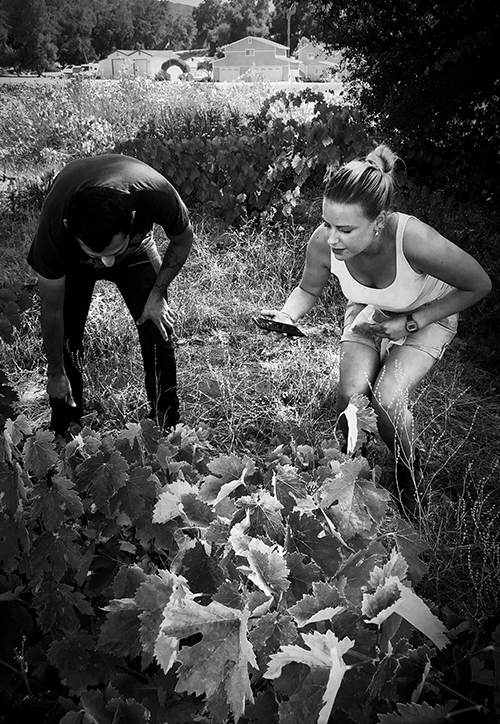
It's June 2019. Raj and I agree to meet in San Diego and drive north through Temecula, hoping to find some interesting vineyards. I had heard that there were still some old vines in small vineyards in the hills east of San Diego, but we could not get anybody to show them to us. We had one connection in Temecula, a grower who really wanted Raj to taste his wine. We drove to him. His vineyards were immaculate; his wines, state of the art, for Napa. We thanked him with genuine admiration for what he was accomplishing, "But," we said, "we are looking for something really different. Old vineyards, planted to old varieties… Maybe even abandoned."
He paused for a long moment, then got out a pen and tore a strip of paper from his tasting sheet. Searched around in his phone for another moment, then handed me the strip. There was a name and a phone number on it. "I think that this is what you are looking for."
We told Christina: "an old Mission vineyard. Abandoned. On a Native American reservation. Maybe more than 100 years old." Then I promptly forgot about it.
Now it's September. We have been making wine for a month, driving up and down the vast unknown in the center of California sometimes twice a week. It's been relentless, incredible. Then one day in the truck, Christina said, "what about that abandoned vineyard?" I could not take another responsibility. I said: "You call.""
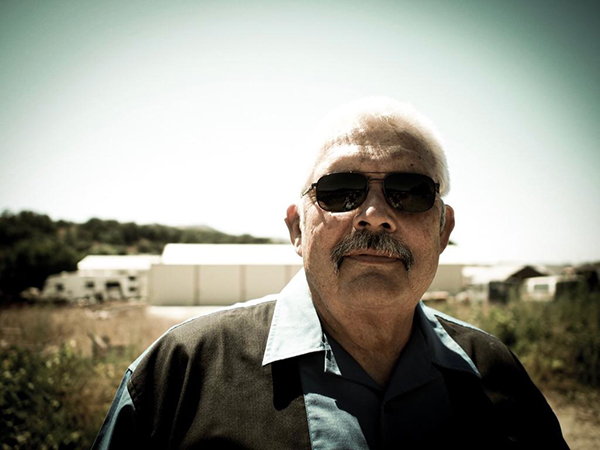
Bob Munoa, owner of Lone Wolf,
shot by Christina on our first visit
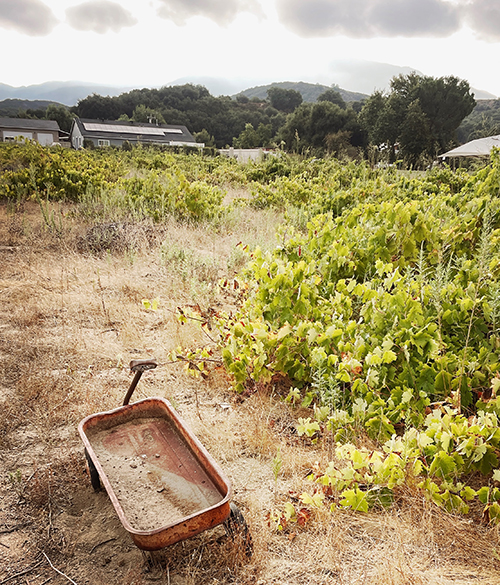
The heart of Lone Wolf
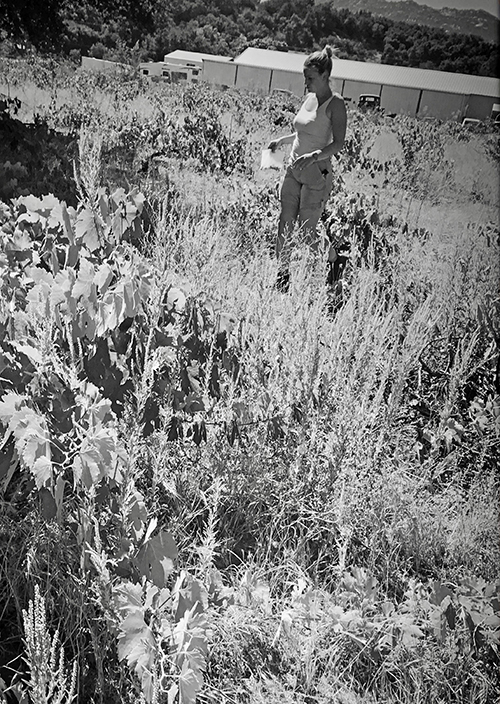
Christina on the first visit
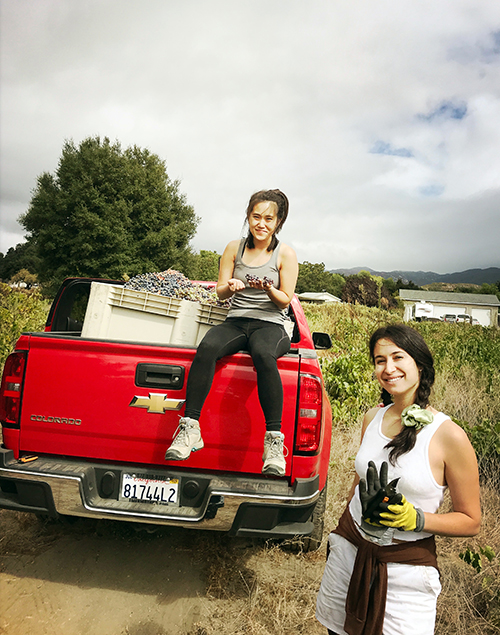
First harvest at Lone Wolf. 100% volunteers. On Christina's last day in the US
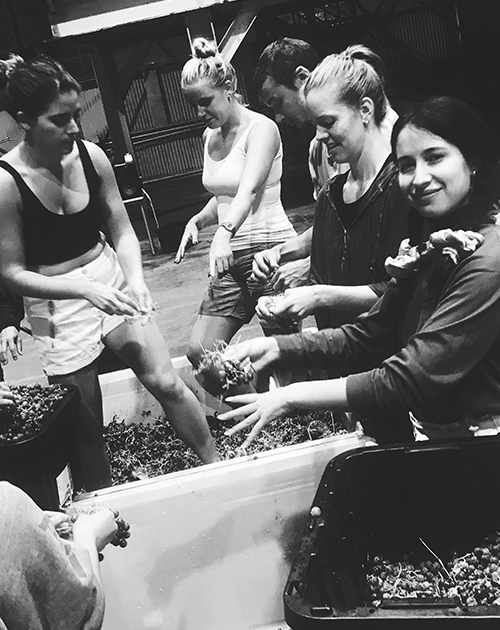
We hauled the fruit back to the winery and worked till the middle of the night.
It was amazing.
Raj made us destem the fruit. "Mission is too tannic for stems."
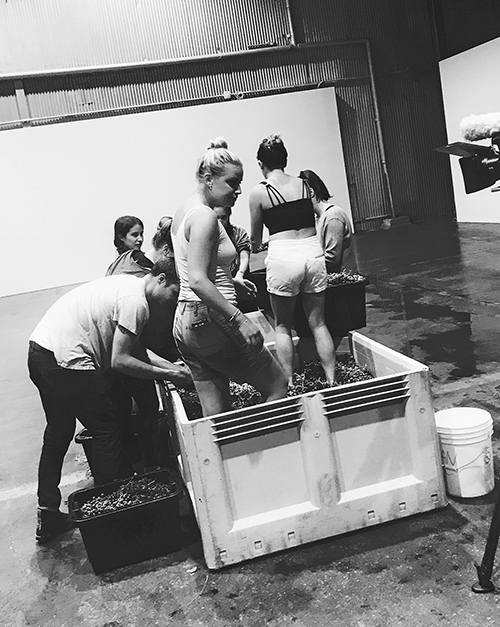
We eventually filled a single puncheon. It began fermenting that night. Nothing has ever smelled like that fermentation. The next day, Christina flew home.
Christina reached Bob Munoa. He agreed to meet us, show us the vineyard. It was on the Pechanga reservation. He met us at the Security Gate, staffed by an armed guard. We will come back to this point.
Our timing was somehow perfect. The fruit was just beginning to achieve ripeness. We offered to buy it. Bob is a tribal elder and the great-grandson of the man who planted it. He waved us off: "It's you or the coyotes. I promised my grandfather I would keep it in the ground."
We returned 10 days later to harvest.
The vineyard had not been farmed regularly since Bob's early youth. There were four big oak trees in the vineyard; Bob said that they started growing when he was about 5 or 6. The vineyard had not been pruned regularly during his whole lifetime; we soon discovered a section with no discernible trunks, no pruning cuts. Just a thick, tangled web.
We knew even before we harvested the fruit that this vineyard was special, and that the opportunity to work in it and with it was magical and remarkable.
And when we harvested the fruit and it began fermenting, we all knew that we had never smelled anything like it.
We organized a crew to return the following February and prune the vineyard, in 2020. The responsibilty was daunting, yet supremely exciting.